
Google puts military use of AI back on the table
On February 4, Google updated its “AI principles,” a document detailing how the company would and wouldn’t use artificial intelligence in its products and services. The old version was split into two sections: “Objectives for AI applications” and “AI applications we will not pursue,” and it explicitly promised not to develop AI weapons or surveillance tools.
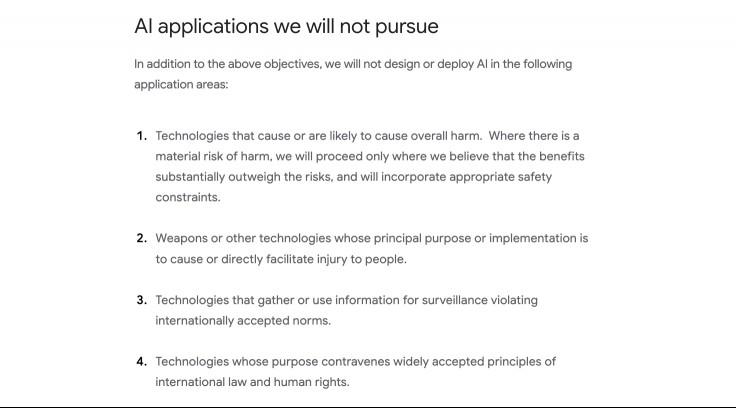
The update was first noticed by The Washington Post, and the most glaring difference is the complete disappearance of any “AI applications we will not pursue” section. In fact, the language of the document now focuses solely on “what Google will do,” with no promises at all about “what Google won’t do.”
Why is this significant? Well, if you say you won’t pursue AI weapons, then you can’t pursue AI weapons. It’s pretty cut and dry. However, if you say you will employ “rigorous design, testing, monitoring, and safeguards to mitigate unintended or harmful outcomes and avoid unfair bias,” then you can pursue whatever you want and just argue that you employed rigorous safeguards.
Similarly, when Google says it will implement “appropriate human oversight,” there’s no way for us to know what that means. Google is the one who decides exactly what appropriate human oversight is. This is a problem because it means the company isn’t actually making any promises or giving us any solid information. It’s just opening things up so it can move around more freely — while still trying to give the impression of social responsibility.
Google’s involvement in the U.S. Department of Defense’s Project Maven in 2017 and 2018 is what led to the original AI principles document. Thousands of its employees protested the military project, and in response, Google did not renew the agreement and promised to stop pursuing AI weapons.
However, fast-forward a few years and most of Google’s competitors are engaging in these kinds of projects, with Meta, OpenAI, and Amazon all allowing some military use of their AI tech. With the increased flexibility of its updated AI principles, Google is effectively free to get back in the game and make some military money. It will be interesting to see if Google’s employees will have anything to say about this in the near future.
Recent Articles